




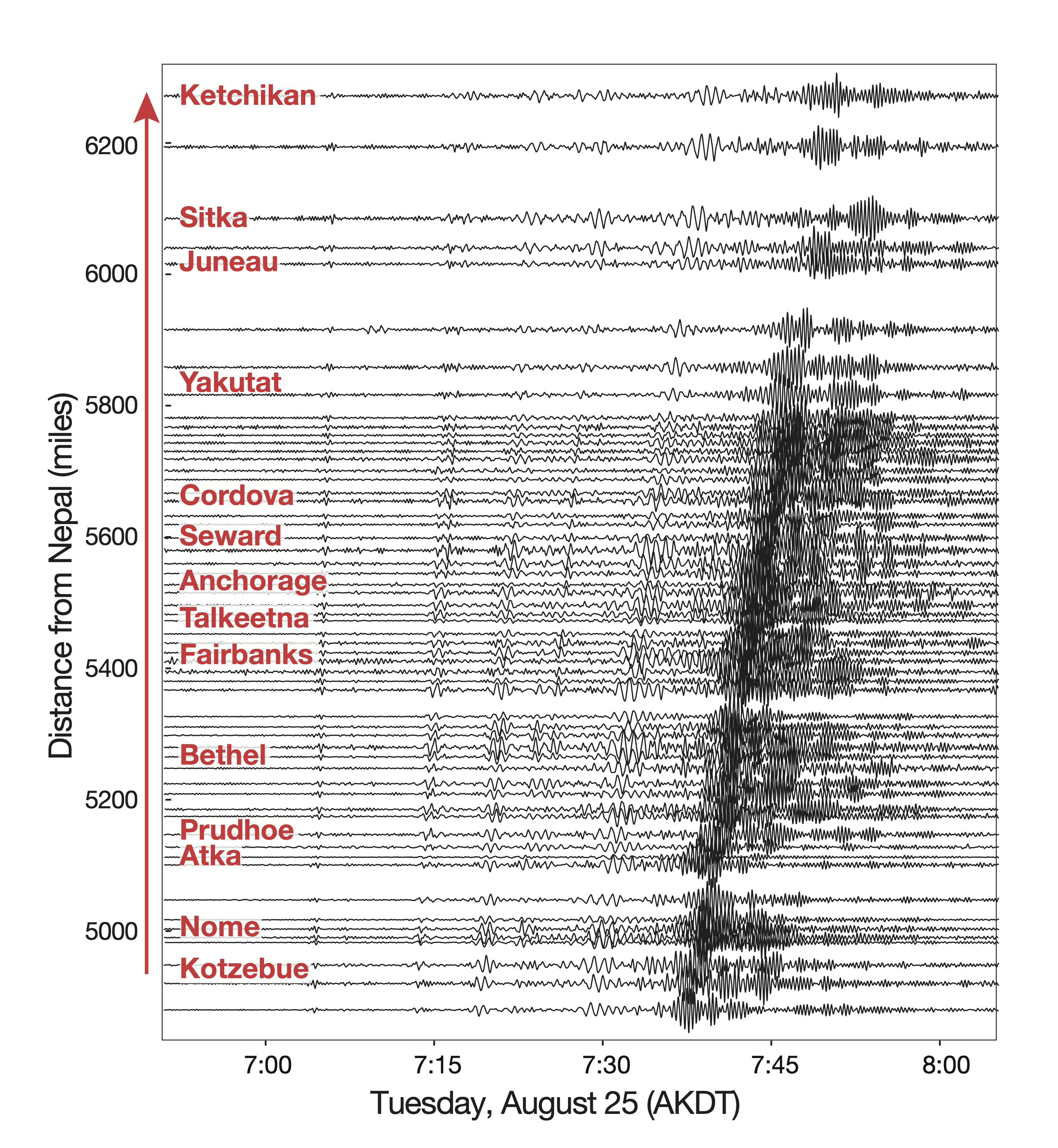
 Figure 1. Seismic waves recorded across Alaska caused by the alpine collapse in Nepal.
Seismic waves from Nepal’s landslide-flood reached Alaska, and so should the lessons
September 02, 2026
A massive collapse high in the mountains in glacier terrain, followed by massive flooding—this is the setting of the recent horrific flood along the Nepal border, but it also sounds familiar to many Alaskans. A mud slurry chock full of rocks and debris evokes images of deadly landslides in Southeast; a collapsed glacial mountainside recalls the record-setting Lituya Bay landslide and tsunami; and violent water rushing down a valley has parallels to Juneau’s outburst floods.
There is a lot about what happened in Nepal that we do not yet understand, and Alaska has been spared a geologic event with this level of human toll. While the heartbreaking stories continue to unfold, we have a responsibility to consider the parallels between Alaska and the Himalaya.
Landslide–glacier collapse
International teams of scientists will be unpacking this event for years to come. With time, we will understand more about how much of it was triggered by a rock landslide versus a collapsing glacier. It is not yet clear where so much water came from. Early reports suggested the event was triggered by a significant earthquake. That does not appear to be the case, though the confusion is understandable because the landslide was large enough to send shockwaves around the globe, registering clearly here in Alaska more than 5000 miles away (Figure 1).
Despite the many things we don’t yet know, a few lessons are clear.
Cascading hazards
Natural hazards often occur together. Whether we refer to the events in Nepal as a landslide, a seismic event, a flood, or a debris flow is irrelevant to the people figuring out how to put their lives back together in the aftermath. The cause was a little bit of all of these, which is actually the norm. In 1964, the waterfronts in Seward, Valdez, and many other towns were impacted by the massive earthquake, which then triggered submarine landslides that started tsunamis that rushed on shore while the earthquake was still shaking. The magnitude 7.0 earthquake in December 2025 under the Hubbard glacier ice field triggered hundreds of avalanches and landslides across the region.
Scientists refer to these chains of events as cascading hazards.
The events in Nepal are just the latest demonstration that cascading hazards are the norm.
Tourists are part of the risk equation. People are drawn to visit geologically spectacular places, whether they are on a religious pilgrimage in Nepal or the vacation of a lifetime in coastal Alaska. The same geologic forces that make these places unique, also make them hazardous. Reports from Nepal suggest that tourists from 30 countries are among the missing. The landslide and tsunami that occurred a year ago in Tracy Arm, 40 miles south of Juneau, missed cruise ships by just hours. Had this event occurred a few days earlier or later, the casualties could have been on par with Nepal. Local residents have some sense of the hazards they live with and, at times, the ability to plan or practice responses. Tourists do not.
A global event
Geologic events of this scale are global. The response and collective mourning for a tragedy like this is global. The data are as well. Last Tuesday evening the seismic waves from the Nepal landslide raced across Alaska (Figure 2). Just like massive earthquakes and volcanic eruptions, and even nuclear tests, a colossal landslide shakes the entire globe. The Alaska Earthquake Center’s mission and expertise is focused on Alaska, but we don’t decide what our instruments record. Though events around the world are not our mandate, they do provide sober opportunities to improve what we do here at home. For example, the algorithms we use for assessing landslides in Alaska estimate the volume of the Nepal landslide at several hundred million cubic meters of rock and ice. As scientists develop better models of what actually occurred, those results will provide a new calibration point that can improve how we quickly estimate landslide size here at home.
Cascading hazards do not fit into a single box. They are bigger than any one scientific field and exceed the responsibility of any single agency. They require collaborative science communicated in terms that everyone can understand. The real benefit comes when communities make plans with these rare events in mind, and practice responses that consider everyone, including visitors.
Alaska is unlikely to suffer the exact same pattern as what we have watched unfold over the past week in Nepal. But as the ground in our high alpine areas slowly thaws and our glaciers continue to retreat, we would be naive not to recognize a few parallels.
Adapted from original Anchorage Daily News commentary on Sept. 1 , 2026